Nigeria and Burkina Faso are deepening cooperation on digital connectivity through Project BRIDGE, with technical teams set to assess routes that could help reduce the cost of internet connectivity in Burkina Faso by as much as 50%.
Nigeria’s minister of communications, innovation and digital economy, Dr Bosun Tijani, discussed the initiative during a visit to Ouagadougou, where he met Burkina Faso’s Minister for Digital Transition, Posts and Communication, Dr Aminata Zerbo-Sabané.
Connectivity was a central focus of the discussions, with Project BRIDGE providing a framework for exploring stronger digital links between the two countries.
Under the proposed cooperation, technical teams will model connectivity routes through Nigeria-Niger-Burkina Faso and Nigeria-Benin-Burkina Faso. The assessment aims to identify a potential pathway for lowering internet connectivity costs in Burkina Faso by up to 50%.
Project BRIDGE is also intended to support faster, more affordable and resilient internet connectivity for Nigerians, while the proposed cross-border routes could strengthen regional digital infrastructure.
Wider digital cooperation
Nigeria and Burkina Faso have agreed to establish a Technical Working Committee to develop the implementation framework for their broader digital partnership.
The cooperation will extend beyond fibre connectivity to include digital skills and talent development. As part of this effort, Nigeria plans to share its 3 Million Technical Talent (3MTT) model with Burkina Faso.
The two countries will also work towards stronger connections between their startup ecosystems and explore collaboration around Burkina Faso’s Innovation Campus.
Further areas of proposed cooperation include artificial intelligence, local-language technologies, shared computing infrastructure, cybersecurity and research.
The partnership therefore covers both physical connectivity and wider digital capabilities, with the two countries seeking to strengthen collaboration across several areas of the digital economy.
Strengthening regional connectivity
The engagement forms part of Nigeria’s broader outreach to neighbouring countries. It follows a recent visit to Benin Republic, while further engagements with Niger and Chad are planned as part of the four-country regional initiative.
The wider objective is to use Nigeria’s expanding digital infrastructure and capabilities to support shared economic opportunities across national borders and deepen regional economic integration.
The initiative also forms part of Nigeria’s efforts to strengthen its position as a digital gateway connecting West Africa and the Sahel.
Nigeria, Burkina Faso explore routes to cut internet costs
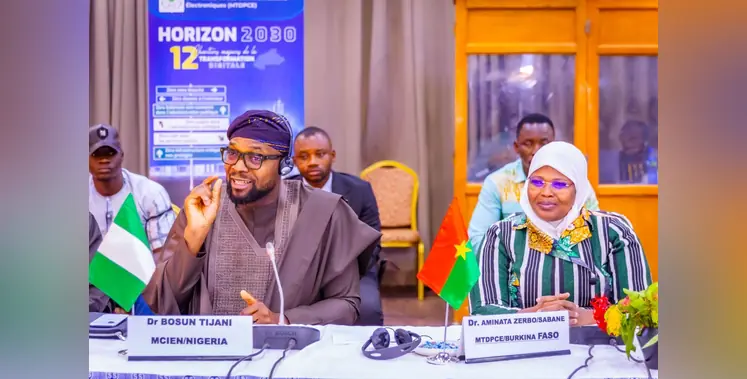
Nigeria and Burkina Faso are exploring Project BRIDGE routes aimed at making internet connectivity more affordable across the region