vb

twitteryou tubeacpLinkedIn

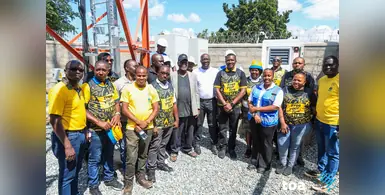
TOA, MTN strengthen Uganda’s digital infrastructure. (Image source: TOA)

TowerCo of Africa (TOA) Uganda hosted MTN Uganda at its Abira site in Arua District on 14 May 2026 as part of MTN Uganda’s FreeYOFire activities in the West Nile region

The engagement marked the official launch of MTN Uganda’s network on infrastructure operated by TOA, highlighting the role of TowerCos in supporting connectivity expansion and digital inclusion.

Connectivity has become an important foundation for modern economies, enabling access to essential services, information, and economic opportunities. In Uganda, this is particularly evident in the West Nile region, where digital adoption is increasing through mobile money, online education, public e-services, digital commerce, and instant communication.

Located in north-western Uganda, the West Nile region is strategically positioned between the Democratic Republic of Congo and South Sudan. The region serves as an important centre for trade flows, human mobility, and cross-border economic activity, with Arua acting as a growing regional hub.

The increasing use of digital services has created greater demand for reliable telecommunications networks. However, challenges remain in expanding network coverage and improving service quality, particularly between urban and rural areas. Telecommunications infrastructure therefore plays an important role in supporting digital access and reducing connectivity gaps.

MTN Uganda’s FreeYOFire initiative focuses on connecting technology with community needs by promoting awareness, encouraging digital service adoption, and highlighting the opportunities created by digitalisation. The Abira event brought together operators, partners, and communities to demonstrate the role of connectivity in everyday life.

The Abira site represents a key infrastructure point in MTN Uganda’s network expansion strategy in the region. The activation of MTN’s network on TOA’s infrastructure supports the delivery of mobile services by providing the necessary foundation for signal coverage, communication continuity, and increasing network capacity.

TowerCo of Africa plays an important role in the telecommunications ecosystem through the provision and management of passive infrastructure, including telecom towers, pylons and masts, technical sites, power supply systems, and infrastructure maintenance and security.

The TowerCo model is built around infrastructure sharing, allowing mobile operators to focus on delivering services while TowerCos support infrastructure deployment, availability, and optimisation. This approach enables better utilisation of existing infrastructure, faster network deployment, and improved efficiency across the telecom sector.

The partnership between TOA Uganda and MTN Uganda demonstrates how collaboration between telecom operators and infrastructure providers can support the continued growth of digital connectivity in Uganda. Through initiatives such as the Abira site launch, the companies are contributing to efforts aimed at expanding access to reliable digital services and supporting the country’s digital transformation.
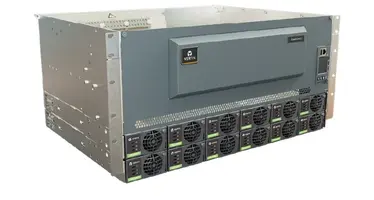

The Vertiv PowerDirect 7100 Energy supplies up to 52 kW of scalable 48 V DC power and delivers efficiency levels of up to 98%. (Image source: Vertiv)

Vertiv has launched the Vertiv PowerDirect 7100 Energy, a hybrid-ready DC power system designed to help telecom and edge operators enhance network reliability and advance their energy transition goals

The system offers scalable power and intelligent controls suited for a wide range of operating environments, from stable utility grids to remote or off-grid locations, giving operators the adaptability needed to manage emerging energy sources and increasing digital demand.

Now available across Europe, the Middle East, and Africa (EMEA), the Vertiv PowerDirect 7100 Energy supplies up to 52 kW of scalable 48 V DC power and delivers efficiency levels of up to 98%. Built on Vertiv’s fourth-generation hybrid architecture, it smoothly incorporates grid, generator, and alternative energy inputs such as solar, wind, or fuel cell systems to ensure continuous power in areas with limited grid dependability.

The system features Vertiv solar converters and Vertiv modular rectifiers, overseen by the Vertiv NetSure Control Unit (NCU). These elements work together to provide advanced load management, remote monitoring, and energy scheduling to boost performance and prolong the life of critical equipment.

“The world expects energy efficiency and flexibility with the growth of communications, such as 5G and edge connectivity”, said Dave Wilson, director of global hybrid solutions at Vertiv. “The Vertiv PowerDirect 7100 Energy gives operators a single, intelligent platform capable of adapting to any grid condition, delivering reliable power while supporting the transition to cleaner, more efficient energy strategies.”

Engineered for compact and demanding environments, the Vertiv PowerDirect 7100 Energy is offered in 500 A, 750 A, and 1000 A options for telecom and edge data racks. Its front-access layout makes installation and maintenance straightforward, while its operating range from minus 40 C to plus 65 C ensures dependable performance in remote or outdoor settings.

The Vertiv PowerDirect 7100 Energy enhances Vertiv’s global portfolio of Vertiv NetSure DC power solutions and hybrid energy systems within its broad power train architecture. When combined with Vertiv’s thermal management, IT management, and lifecycle services, it delivers a strong platform for efficient, reliable, and future-ready digital infrastructure.

International Power Control Systems (IPCS) has been named as a distribution partner in Malawi by Vertiv, a specialist in critical digital infrastructure

International Power Control Systems (IPCS) has been named as a distribution partner in Malawi by Vertiv, a specialist in critical digital infrastructure

The new agreement marks a major step in expanding Vertiv’s reach in the Malawian market, leveraging IPCS’s established experience in power control and alternative energy solutions.

“This collaboration will enhance IPCS’s product portfolio, reinforcing our position as a trusted leader in the Malawian market,” said Rumbidzai Bere, business development and marketing director at IPCS.

“The combination of IPCS’s experience in power control and renewable energy and Vertiv’s innovative solutions, such as lithium-ion compatible UPS systems and IT infrastructure products, will bring a new layer of reliability and efficiency to organisations in Malawi, enabling them to equip their critical infrastructure with the resilient, scalable infrastructure needed to support them over time.”

The agreement includes the distribution of Vertiv's comprehensive critical digital infrastructure portfolio, including single-phase and three-phase AC power solutions, surge protection, integrated racks and cabinets and IT infrastructure management solutions, to support the growing demands for computing and AI infrastructure in the region.

The Malawi government’s National Compact for Energy sets out the country’s vision and commitment to increasing access to electricity and alternative energy by 2030, with the aim of providing electricity to 70% of the population.

“Our collaboration with IPCS is a step toward reinforcing Vertiv’s local footprint and a strategic move to align with a well-established, respected partner,” said Gary Chomse, Vertiv’s regional director for central and southern Africa.

“This is proof of our presence, commitment and investment in the Malawian power control, data centre infrastructure, and alternative energy sectors.

“Through this partnership, Vertiv and IPCS are committed to contributing to Malawi’s technological evolution, providing businesses with the power and infrastructure solutions needed to support the country’s digital future.”

IPCS, a wholly Malawian-owned company, has built its reputation as a leader in power solutions since its foundation in 1998.

With a strong track record in supplying, installing and maintaining critical power infrastructure, including uninterruptible power supplies (UPS), data centre solutions, automatic voltage regulators, surge protectors, and alternative energy systems, IPCS is well-positioned to supply, install, and support Vertiv solutions in Malawi.

“This means that, as digital transformation accelerates and electrification efforts continue, there is immense potential for growth in the IT and power sectors,” added Bere.

“With Malawi’s youthful population, 80% of whom are under the age of 35, we also believe that the rise in IT skills, the use of AI and cybersecurity advancements will further drive demand for sophisticated data centre solutions.” 

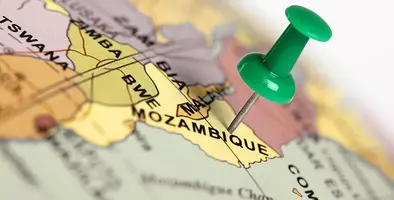
Mozambique’s energy sector to receive a boost from the African Development Bank following the institution’s participation in Maputo at the Africa50 summit

Mozambique’s energy sector is to receive a boost from the African Development Bank (AfDB) following the institution’s participation in Maputo at the Africa50 shareholders meeting

Africa50 is an investment platform established by African governments with the AfDB, which has now surpassed US$1.4bn in managed assets directed at infrastructure provision.

At the 2025 summit, a memorandum of understanding was signed with Electricidade de Mozambique (EDM) for the development of three transmission lines under an Independent Power Transmission (IPT) framework.

“This will help support the government’s ambition to achieve universal electricity access by 2030 and become a significant exporter of power across the Southern African Development Community,” a statement released by AfDB noted.

Finalisation of the project development agreements is now underway for three lines under an IPT framework, partnering with Power Grid and EDM, it added.

A separate MoU was also signed with the Ministry of Communications and Digital Transformation to build a new data centre facility in Maputo and to modernise the existing one.

Africa50’s Mozambique portfolio already includes equity investment in the 175MW Central Termica de Ressano Garcia (CTRG) gas-fired power plant.

According to Dr Akinwumi Adesina, president of the AfDB Group, investments by Africa50 complement broader support from the bank itself that have delivered some US$1.6bn to Mozambique over the past decade.

This investment includes US$400mn in senior debt financing for the country's flagship US$20bn liquified natural gas (LNG) project in Cabo Delgado, as well as the US$34mn Mozambique Energy for All Project, which has connected more than 45,500 households to electricity.

The bank claims its energy sector investments have helped to double Mozambique's national energy access rate from 30% in 2018 to 60% in 2024.

The AfDB has also supported agricultural transformation through special agro-industrial processing zones, including the Pemba-Lichinga corridor, while financing critical transport infrastructure along the Nacala and Beira corridors that enhance regional trade connectivity for the African Continental Free Trade Area.

Earlier this year, the AfDB approved US$43.6mn in funding for the construction of the Namaacha-Boane transmission line and related electricity infrastructure

EDM will implement the project in partnership with Central Eléctrica da Namaacha (CEN), a private sector-led development group involving Globeleq Africa Limited and Source Energia that is building the 120 MW Namaacha wind farm in the southwestern part of the country. 

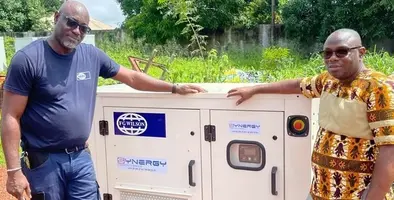
GeniWatt expands footprint with FG Wilson gensets across Guinea Bissau and Cameroon’s telecom and healthcare sectors. (Image source: GeniWatt)

France-based GeniWatt has enjoyed a string of Africa successes so far in 2025, most recently completing a genset installation at a telecommunications site in Guinea Bissau

The company supplied a P22 generator set, in partnership with Synergy, for telecoms group MTN in the West African country.

The FG Wilson P22 and P33 gensets are “perfectly suited” to telecoms towers, the company noted in a statement, citing soundproof enclosures, safety options, large tanks and telemetry, with full customisation available.

Founded in 2011 by Damien Fétis, president of Secodi, GeniWatt was specially created for the distribution of FG Wilson generators in France, but has extended its footprint deeply into Africa.

West Africa, in particular, has proved fruitful ground so far during 2025.

That includes a string of orders from Cameroon, working together with another local partner, DM Approtech.

Together, the two companies have supplied generators to various groups and associations based in Yaoundé, the nation’s capital.

It includes a 110kVA FG Wilson emergency generator for the Association pour la Promotion de la Femme building, and another emergency generator with its source inverter for the Centre de Formation Sorawell, a separate entity created by the Association pour la Promotion de la Femme.

In addition, the two companies supplied a P22 generator for a new maternity unit financed by the Compassion Sans Frontière association.

Last year, GeniWatt also played a key role in a major dam project in Cameroon, modifying an FG Wilson open P150 for installation at the Nachtigal hydroelectric plant, which sits about 65 kilometres north-east of the capital.

The project included automatic load bank and oil top-up, dual starter with dual battery sets, NFE37-312 GSS2 compliance for safety, a tank with two electric pumps and a manual pump, conducted again alongside DM Approtech, with supervision from EDF to validate the specifications.

Nachtigal is a key strategic project for Cameroon, operated by a consortium that includes energy giant EDF.

The dam’s first turbine is now operational, with full commissioning expected during 2025.

With an expected total capacity of 420 MW, it will eventually cover nearly 30% of Cameroon’s energy needs with clean, available and inexpensive electricity.

More Articles …