Powertel Communications and Paratus Zimbabwe have activated the first operational segment of their cross-border fibre infrastructure project, marking a significant step towards establishing a high-capacity digital corridor linking Zimbabwe with Botswana, Zambia, South Africa and the wider Paratus network across Southern Africa
The live section, stretching between Plumtree and Bulawayo, represents the first phase of a broader initiative launched under the public-private partnership (PPP) signed by the two companies in June 2025. The agreement combines Powertel's nationwide fibre backbone with Paratus' regional network, technical expertise and infrastructure development experience to expand long-distance connectivity across Zimbabwe.
As the first Paratus-connected fibre route into Zimbabwe, the newly commissioned link enhances regional interconnection while strengthening cross-border communications. The project is designed to improve digital inclusion, increase network resilience and support long-term economic development by integrating Zimbabwe into the wider Southern African telecommunications ecosystem.
Built using advanced Dense Wavelength Division Multiplexing (DWDM) technology, the route is capable of supporting more than 10Tbps of capacity. It is currently operational with an equipped capacity of 800Gbps, providing immediate bandwidth while allowing for future expansion as demand increases. The second phase, extending from Bulawayo to Livingstone, is scheduled to go live in September 2026, completing the strategic three-country corridor.
Managing Director of Powertel Communications, Willard Nyagwande says the achievement demonstrates the impact of strong collaboration in delivering national and regional connectivity goals.
"This is a defining moment for Powertel as the project is planned, built, owned and operated by Powertel, as the licensed national carrier under POTRAZ and the telecommunications arm of ZESA. The IRU with our partner Paratus is the commercial vehicle that this project's success rides on; that allows us to lead this corridor with the financial backing of a renowned and reputable continental partner, whilst retaining the operational primacy over the asset, the regulator-facing relationship, and accountability to ZESA and the people of Zimbabwe. This IRU converts a national infrastructure ambition into a bankable, investable, replicable commercial reality. It aligns the incentives of both parties over the full economic life of the asset. That is precisely why this model is significant. It is the structure that has made the Plumtree–Victoria Falls corridor financeable today, and it is the same structure that will carry the Bulawayo–Livingstone, and the wider Botswana–Zimbabwe–Zambia digital spine, tomorrow!"
Chief Commercial Officer of Paratus Group, Martin Cox says the first live deployment delivers on the vision announced when the partnership was formed."When we announced the PPP and this project last year, we set out a clear vision to create the first high-capacity digital corridor linking Botswana, Zimbabwe and Zambia. Today, we are delighted that the first phase is live, carrying traffic and already delivering real, measurable progress towards that vision.
This is about far more than fiber infrastructure. It is about building the digital foundations that enable economic growth, regional integration and improved access to world-class connectivity. By integrating Zimbabwe into the Paratus network – Africa's quality network – we are extending the reach of our contiguous network from South Africa through Botswana and Zimbabwe into Zambia, creating resilient connectivity for businesses, service providers and communities across the region.
This is just the first of many routes that Paratus plans to develop as we continue expanding Africa's quality network."
Speaking during the launch, Head of Cluster: Energy and Trading, Tinashe Yafele, described the completion of the first phase as an important milestone in Zimbabwe's digital transformation programme.
"With an equipped capacity of 800Gbps, this project stands as a significant landmark in Zimbabwe's digital transformation journey. This project is more than the just the deployment of fiber optic infrastructure. It represents a strategic investment in Zimbabwe's digital economy, regional integration and long-term economic development. The project directly supports the aspirations of Vision 2030, the National Development Strategy and Zimbabwe's Digital Economy Strategy by strengthening the digital infrastructure required for modern commerce, education, healthcare, e-government, financial services and industrial development. It also positions Zimbabwe as a strategic regional telecommunications gateway connecting Southern Africa."
He further encouraged both companies to maintain momentum on the remaining phases of the project.
"Your unified focus remains a powerful testament that sets the pace for shared vision and operational excellence."
Construction of the next phase, which will extend the network from Bulawayo to Livingstone, is progressing and is expected to be completed during the next quarter. Once operational, the expanded corridor will provide additional network resilience, improve regional connectivity and create new opportunities for trade, innovation and digital participation across Southern Africa.
The companies say the project also demonstrates how the long-term IRU model can support investment in strategic telecommunications infrastructure, creating a scalable framework for future cross-border digital connectivity across the region.
Powertel, Paratus activate Zimbabwe regional fibre corridor
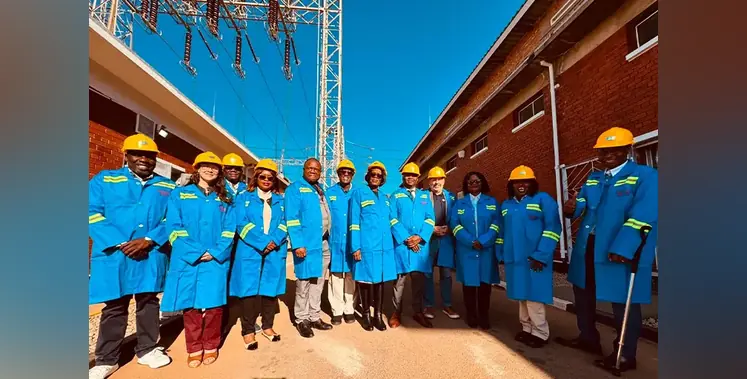
Zimbabwe launches high-capacity cross-border fibre corridor with Paratus. (Image source: Paratus)