Governments, industry stakeholders and international organisations representing more than 70 countries have reaffirmed the importance of strengthening support for submarine cables, the critical infrastructure underpinning global digital communications
The commitment was reinforced at the International Submarine Cable Resilience Summit 2026, held in Porto, Portugal.
At the close of the summit, participants endorsed a declaration alongside a set of recommendations developed by the International Advisory Body on Submarine Cable Resilience. The guidance is intended to enhance cooperation between public and private sector stakeholders, with measures ranging from reducing repair times to improving connectivity resilience in underserved regions.
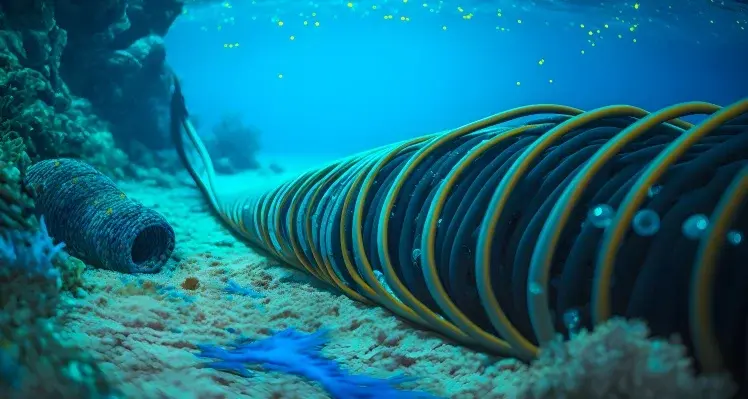
Submarine telecommunications cables carry the vast majority of global data traffic. Around 500 cables spanning more than 1.7 million km form the backbone of global connectivity, supporting economic growth, social development and digital access for individuals, institutions and businesses worldwide.
“When it comes to critical digital infrastructure like submarine cables, resilience is both an end-to-end imperative and a shared responsibility," said ITU secretary-general Doreen Bogdan-Martin.
“The Porto Summit outcomes reaffirm our commitment to strengthening global cooperation that can make a real difference in policy engagement, operational readiness, and investment decisions."
The summit was organised by Portugal’s national communications regulator, ANACOM, in collaboration with the International Telecommunication Union (ITU) and the International Cable Protection Committee (ICPC). It also hosted a meeting of the International Advisory Body on Submarine Cable Resilience, established by ITU and ICPC in 2024.
“I am deeply proud to have had the unique opportunity to guide such a distinguished group of leaders from both the public and private sectors, representing all regions of the world," said Sandra Maximiano, chairwoman of ANACOM and Co-Chair of the Advisory Body.
“The International Advisory Body was created to deliver concrete and meaningful impact, and I firmly believe it is already doing so. This impact is particularly significant for regions, countries, and remote islands where economic incentives for rapid response mechanisms are more limited, rendering them especially vulnerable to submarine cable disruptions."
Building on the inaugural summit held in Abuja, Nigeria, last year, the Porto gathering marked the second in-person meeting of the Advisory Body.
The recommendations presented in Porto focus on streamlining submarine cable permitting, maintenance and repair processes, improving legal and regulatory frameworks, and promoting geographic diversity and redundancy. Particular emphasis is placed on strengthening resilience for Small Island Developing States, Least Developed Countries, Landlocked Developing Countries and other underserved regions.
Additional guidance encourages the adoption of industry best practices for risk assessment and response, improved cable protection through better marine planning, and increased investment in training, innovation and new technologies. Comprehensive reports based on the Advisory Body’s work are expected to be released later in the year.
“It is encouraging to see the cooperation between governments and industry in developing these recommendations," said ICPC Chairman Dean Veverka. “We look forward to their implementation to strengthen cable protection and resilience."
Subsea cables carry more than 99% of international data traffic, with over 200 cable faults reported globally each year. Disruptions can have significant consequences for economies, public services and access to information, directly affecting the daily lives of billions of people around the world.
Global leaders reaffirm commitment to submarine cable resilience
Global leaders push for stronger submarine cable resilience